Skip to:

Every summer, the same scenario plays out on courses across the country. Bentgrass greens that looked pristine in June begin to thin and decline in July. Disease pressure accelerates. Recovery from traffic slows. And no matter how diligently the superintendent manages irrigation and air movement, the turf continues to struggle until temperatures finally moderate in September.
The instinct is to treat heat stress as an acute event — something that happens to turf during a heat wave and resolves when conditions improve. Science tells a different story. Heat stress is a cumulative, physiological process that begins well before visible symptoms appear, and the window to intervene effectively closes earlier than most programs account for.

What Heat Stress Actually Does to the Plant
Creeping bentgrass is a cool-season species with an optimal growth range of approximately 60–75°F. When soil temperatures at a 2-inch depth consistently exceed 77–80°F, a cascade of physiological changes begins at the cellular level — most of which are invisible until the damage is already done.
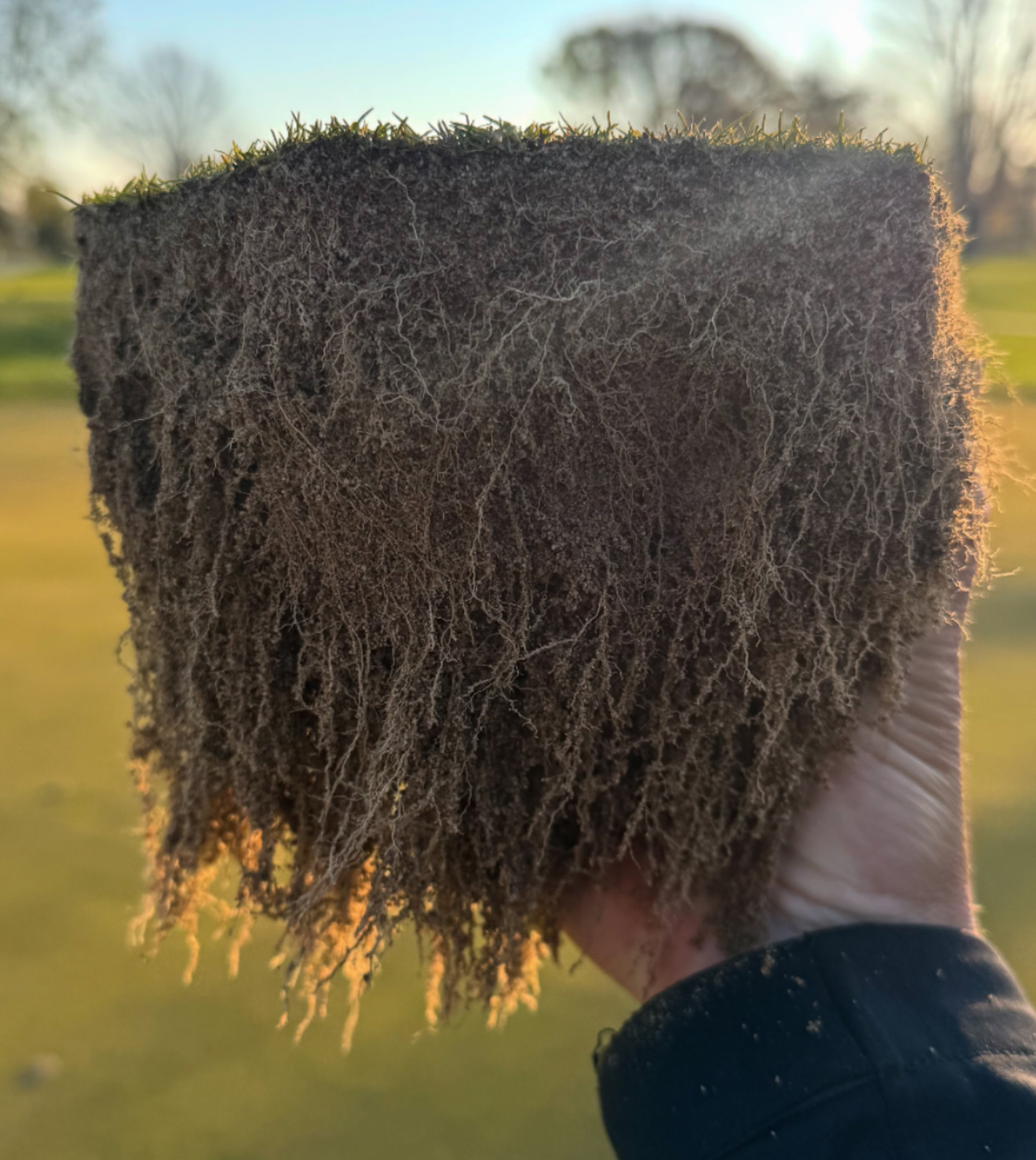
Protein denaturation is the most immediate effect. Heat disrupts enzyme function and destabilizes structural proteins in plant cells, impairing the metabolic processes that drive photosynthesis, respiration, and nutrient uptake. Simultaneously, root respiration rates increase dramatically under elevated soil temperatures, consuming carbohydrate reserves that the plant needs for stress tolerance and recovery. Research has consistently shown that bentgrass root mass can decline by 50% or more during summer stress periods — a loss that directly compromises the plant’s ability to access water and nutrients even when both are present in the rootzone.
The compounding effect of reduced carbohydrate reserves and compromised root function creates a feedback loop: a heat-stressed plant is less capable of absorbing the nutrients it needs to recover from heat stress. By the time symptoms become visible — yellowing, thinning, disease susceptibility — the physiological deficit is already significant.
The Pre-Stress Window: Why Timing Matters
The most effective heat stress management happens in May and early June, before soil temperatures reach the critical threshold. This is not a new concept agronomically, but it remains underutilized in practice because the urgency isn’t visible yet. Turf looks fine. Conditions are comfortable. And the instinct to address problems reactively rather than proactively is difficult to overcome when budgets and labor are constrained.
The biological and biochemical interventions that provide the most protection during peak stress are those that are already established in the plant and soil system when stress begins. Building carbohydrate reserves through sound nutrition, stimulating deep root development before soil temperatures rise, and supporting osmoregulatory capacity in advance of drought-heat combinations all require lead time that reactive programs don’t have.
Osmoregulation: The Mechanism Most Programs Miss
One of the most important and least-discussed aspects of heat tolerance in turfgrass is osmoregulation — the plant’s ability to manage cellular water balance under high vapor pressure deficit and elevated temperatures. Under heat stress, plants accumulate compatible solutes (primarily proline, glycine betaine, and soluble sugars) in cells to maintain turgor pressure and protect enzyme function. This process is metabolically expensive and draws heavily on the carbohydrate pool the plant is already depleting to manage elevated respiration.
Bio-nutrient programs that support osmoregulatory capacity — providing the substrate and biological stimulus for compatible solute accumulation — can meaningfully extend the plant’s functional tolerance window during summer stress. TurfRx® OsmoPro™ was specifically formulated to address this mechanism, providing targeted support for cellular water management when the plant’s own resources are most compromised.
A scientifically grounded pre-summer heat stress protocol should include four components applied in sequence from late spring through early summer:
The Cost of Waiting
Reactive heat stress management — applying products after symptoms appear — is both less effective and more expensive than prevention. Recovery applications require more product, more labor, and more time. And during peak summer stress, the window for effective recovery may be limited by continued temperature pressure, disease, and traffic.
The courses that consistently maintain superior summer turf quality are those where the agronomic decisions made in April and May are doing the work in July and August. The biology doesn’t wait for the problem to be visible. Neither should the program.
Don’t wait until July to protect your greens. Talk to your regional Redox agronomist now about building a pre-summer protocol with TurfRx® technology. Find your rep at redoxgrows.com/turf-representatives.
Subscribe to receive our Redox Bio-Nutrients updates