Skip to:

Golf course agronomics generates a lot of data. Soil moisture readings, green speed measurements, spray application records, nutrient ratios — superintendents manage more metrics than most people in any profession. And yet one of the most consequential indicators of turf health almost never makes it onto a tracking dashboard or a weekly report.
Root depth. Not an estimate. Not an assumption based on how the turf looks. Actual, measured root depth — taken consistently, at defined intervals, across the season.
The reason it gets overlooked isn’t ignorance. Most experienced superintendents understand root development intuitively. The reason is that measuring it requires pulling a core and looking, which feels less systematic than a sensor reading or a lab result. But the information a root core delivers — about moisture stress, nutrient access, biological activity, and summer readiness — is difficult to replicate with any other single measurement. Read more about heat stress here.

Why Root Depth Predicts Summer Performance
A turfgrass root system is the plant’s primary interface with every resource it needs to survive: water, oxygen, and nutrients. The depth and density of that root system determines how large a reservoir the plant can access when surface conditions become hostile.
During a heat event or drought period, soil moisture in the top two inches of a sand-based rootzone can be depleted within 24 to 48 hours of irrigation. A plant with roots concentrated in that zone has no buffer — it is immediately dependent on the next irrigation cycle to maintain turgor and metabolic function. A plant with roots extending four to six inches or deeper can continue drawing moisture from the lower profile long after the surface has dried, buying critical time between irrigation events and reducing the risk of wilt and stress injury.
The same principle applies to nutrients. Leaching losses from rain and irrigation are most severe in the upper rootzone. Nutrients that migrate below the active root zone are effectively lost from the plant’s accessible pool, regardless of how they appear on a soil test. A deeper root system intercepts more of those mobile nutrients — particularly nitrate nitrogen — before they move out of reach.
What Suppresses Root Development
Understanding what limits root depth is the first step toward managing it. Several common conditions on golf courses actively suppress downward root growth:
Soil temperatures above 77°F at a 2-inch depth directly inhibit root cell elongation and accelerate the consumption of root carbohydrate reserves. Roots retreat upward toward cooler surface zones — the opposite of what the plant needs for stress resilience.
Mechanical compaction and organic matter accumulation create physical barriers to root penetration. Roots cannot extend through zones where pore space is insufficient for tip growth, regardless of how favorable conditions might be below.
Saturated, oxygen-deficient rootzones shift root metabolism from aerobic respiration to fermentation, producing ethanol and other compounds toxic to root tissue. Even brief periods of saturation can cause root tip dieback that reduces effective rooting depth for weeks.
Excessive nitrogen — particularly in soluble, readily available forms — drives disproportionate shoot growth at the expense of root carbon allocation. The plant prioritizes canopy development when nitrogen is abundant, a response that reduces root mass and depth precisely when summer stress is approaching.
Plant-growth-promoting rhizobacteria (PGPR) and mycorrhizal fungi play a direct role in stimulating root elongation and branching. Soils with suppressed microbial populations produce less of the biological signals — auxins, cytokinins, and volatile organic compounds — that drive root development.
How to Measure and Track It
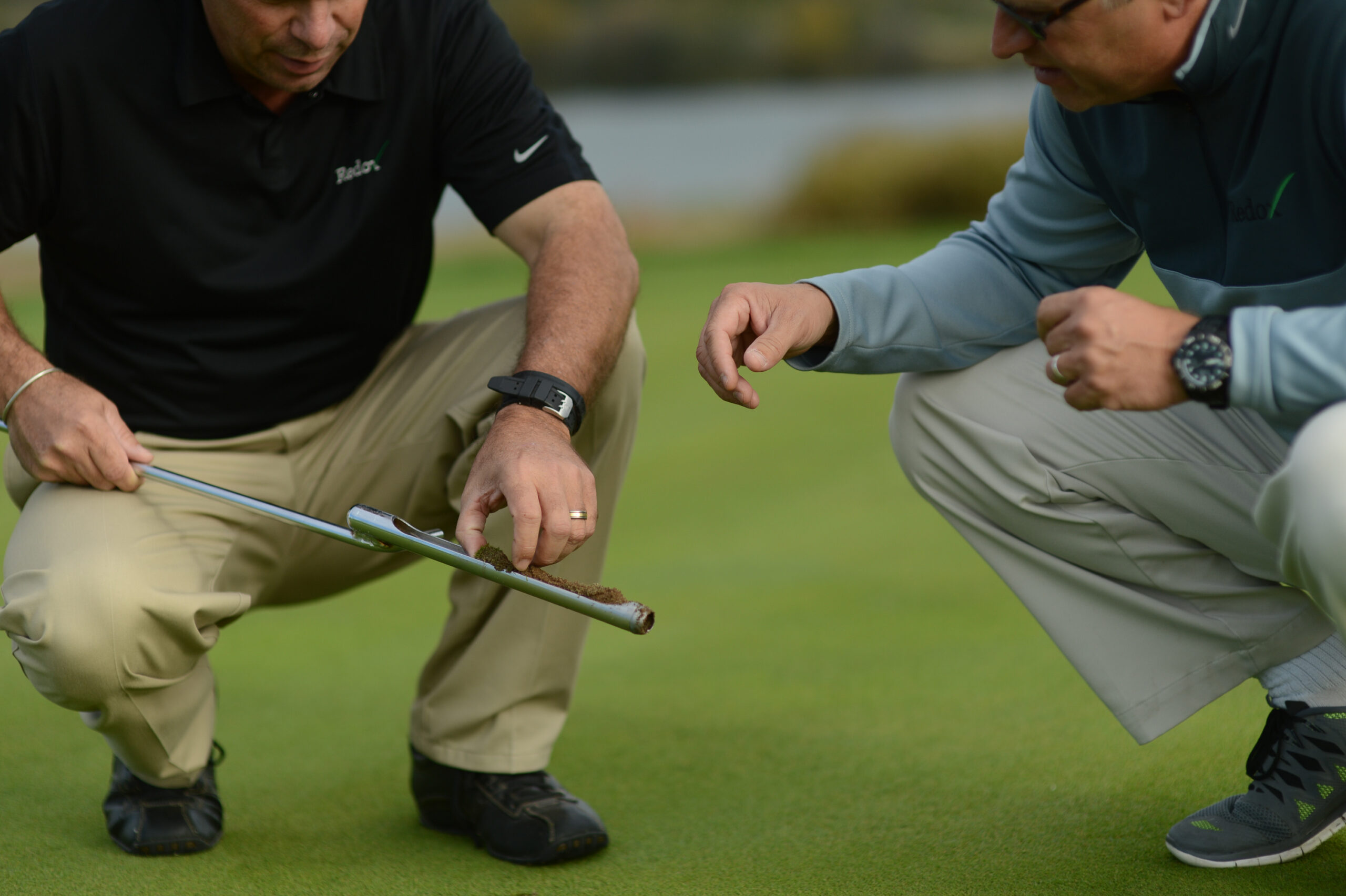
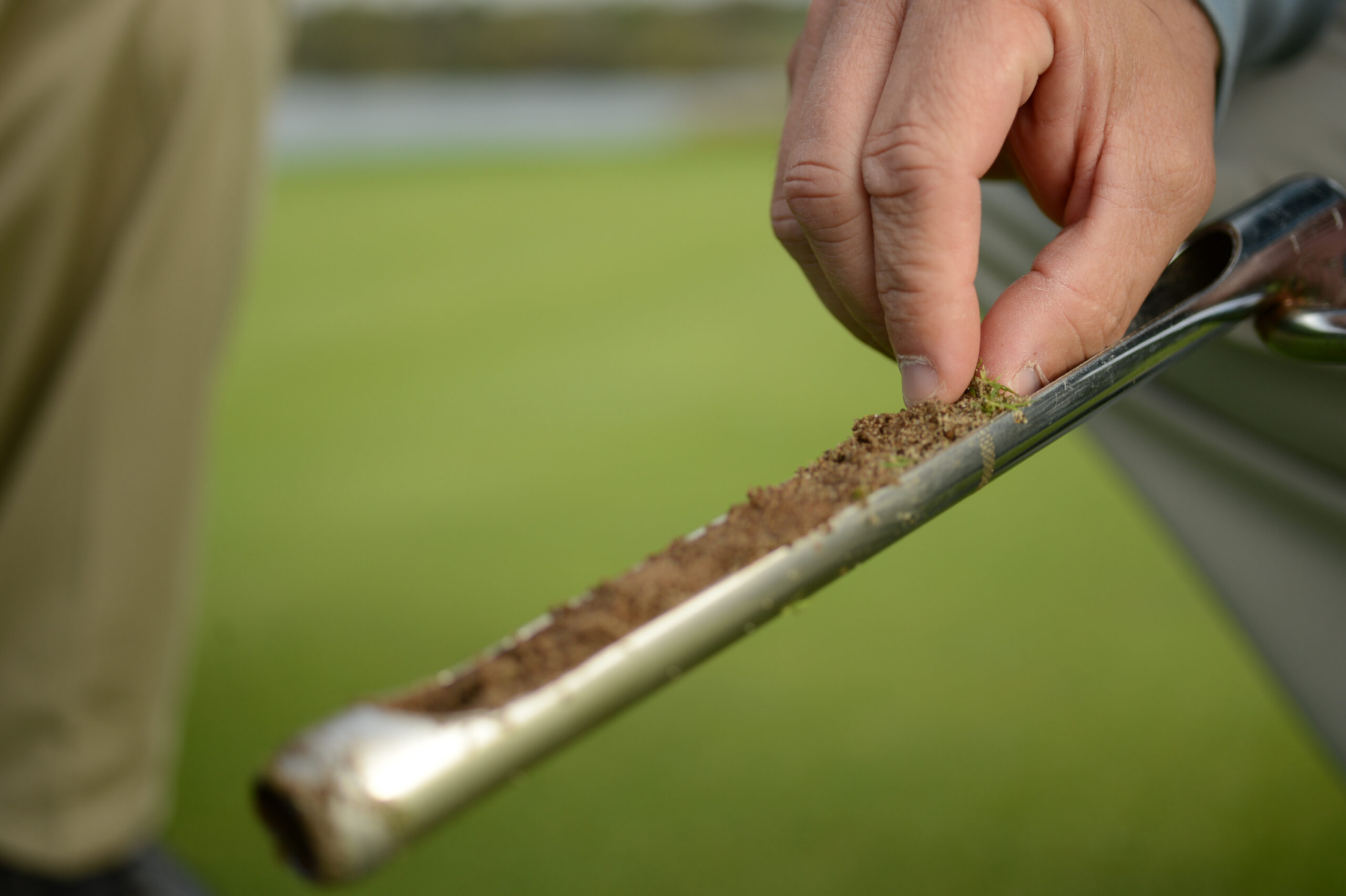
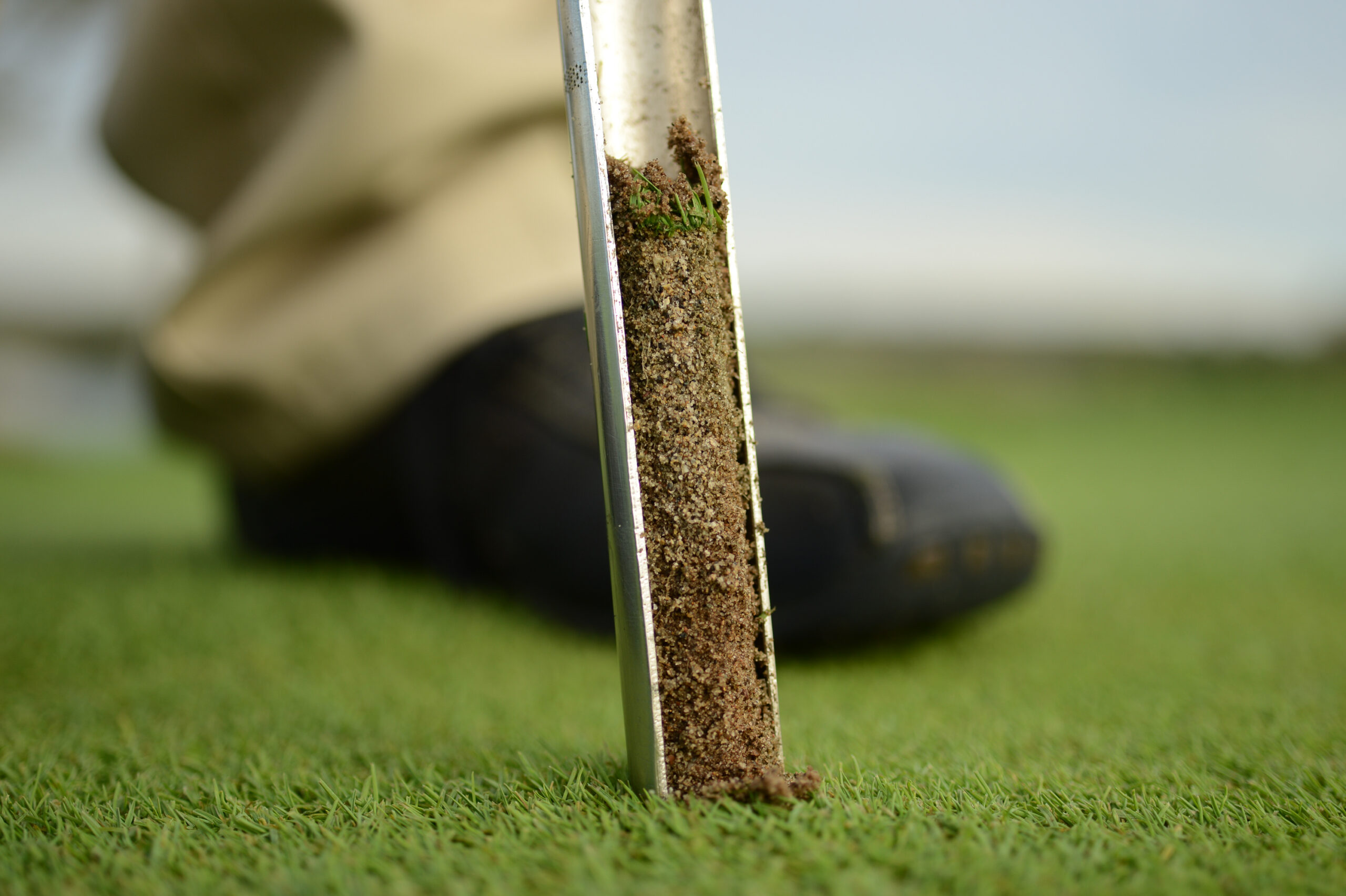
Root depth monitoring doesn’t require specialized equipment. A standard soil probe or cup cutter, a ruler, and a consistent protocol are sufficient to build a meaningful data set over time.
The key is consistency: same locations, same time of day, same measurement method, recorded at regular intervals through the season. A simple log that tracks root depth alongside soil temperature, recent rainfall, and fertilizer applications will reveal correlations — between specific inputs and root response, between temperature thresholds and root retreat — that no other data source provides.
Industry benchmarks suggest that greens maintaining roots consistently below four inches entering summer are significantly more stress-resilient than those with shallower systems. Tracking your own course’s baseline over multiple seasons is more valuable than any published standard, because it accounts for your soil type, construction, and management history.
Building a Root-Focused Program
A program designed to maximize root depth before summer combines several elements that must be sequenced correctly:
Managing nitrogen form and timing in spring to favor root carbon accumulation over shoot production is the most critical and most frequently overlooked decision in pre-summer programming. TurfRx® Supreme™ supports this process directly — its fermented mannitol, fulvic and humic substrates, and protein hydrolysate biostimulants support phloem loading and efficient carbohydrate transport to roots, crowns, and growing points without the nitrogen push that depletes the root carbon budget heading into summer.
Spring applications of biological stimulants that support PGPR populations and mycorrhizal networks provide the biological signals that drive root elongation — and need time to establish before soil temperatures rise. TurfRx® Platinum delivers the soluble carbon sources, humic substrates, and protein hydrolysates that fuel soil microbial activity and plant energy metabolism, building the below-ground biological foundation that amplifies every other input in the program.
Targeted aeration and topdressing to break up layering and improve pore space in the critical 3–6 inch zone gives roots the physical path to grow deeper. TurfRx® PeneCal complements this work by penetrating compacted layers, improving soil aggregation and pore space, and displacing excess sodium that restricts root expansion — effectively extending what mechanical cultivation achieves without additional disruption to the playing surface.
Phosphorus and potassium play central roles in root development and stress tolerance. TurfRx® P+ reacts high phosphorus with soluble carbon and L-amino acids specifically to promote lateral root branching in sand-based rootzones — and for programs where a combined biological and nutritional approach is preferred, TurfRx® Platinum delivers the same soluble carbon foundation alongside P and K nutrition in a single, simplified input. TurfRx® Ca then addresses the structural side of root development — delivering microencapsulated ionic calcium directly into the root zone in plant-available form while its protein hydrolysate biostimulants actively stimulate cell wall development and root tip elongation.
Root depth is not a glamorous metric. It does not appear on a green speed report or a course rating. But in July, when greens are under maximum pressure and recovery capacity is everything, the work done in April and May to push roots deeper is the most important work of the season.
Want to build a root development protocol for your course? Explore TurfRx™ bio-nutrient programs designed to support root mass and depth from early spring through summer stress. Visit redoxgrows.com/turf-bionutrients.
Subscribe to receive our Redox Bio-Nutrients updates